
Earnings Presentation Transcripts for the 26th Fiscal Period (ended April 2026)
Introduction

Hoshino Resort Asset Management Co., Ltd.
Kenji Akimoto, CEO:
Hello everyone.
My name is Kenji Akimoto from Hoshino Resort Asset Management (hereinafter “HRAM”)
■Introduction: Overview of Japan’s Tourism Market■
In March of this year, the Japanese government approved the Fifth Basic Plan for the Promotion of a Tourism-Oriented Nation. While not every element of the plan may be implemented exactly as envisioned, it provides a clear indication of the overall direction of tourism policy in Japan.
We would like to highlight three key points.
First, tourism has been designated as a strategic industry. Inbound visitor spending reached 9.5 trillion yen in 2025. In comparison with export industries, this places tourism second only to the automotive industry. The new plan sets targets of 60 million inbound visitors and 15 trillion yen in visitor spending by 2030, compared with 42.68 million visitors in 2025. Achieving these goals will require a more geographically diversified tourism model. Demand will need to extend beyond major metropolitan areas and into regional destinations across Japan. This objective is clearly reflected in the plan.
Second, domestic travel spending by Japanese travelers reached a record 26.8 trillion yen in 2025. In response, the government raised its 2030 target significantly, from 22 to 30 trillion yen. Even if spending were to remain at the current level of 26.8 trillion yen, the domestic market would remain sizeable, and domestic travel continues to be the most important segment of Japan's tourism industry.
Third, the plan identifies the tourism industry's low labor productivity as a key challenge and anticipates initiatives to improve productivity. One measure included in the plan is the leveling of domestic travel demand throughout the year, a topic advocated by Hoshino Resorts Representative Yoshiharu Hoshino for many years. As Japan's population declines, maintaining the vast scale of the domestic tourism market will require addressing challenges arising from the concentration of demand on a few dates in the year.
Taken together, these three points suggest that expanding demand in regional destinations, which have limited international recognition, will be essential to the continued growth of Japan's tourism industry and the achievement of its long-term goals. Many initiatives will be implemented to stimulate both inbound and domestic demand in these regions. The majority of the properties owned by the REIT are located outside the major metropolitan areas, and by aligning with regional and national tourism policies, we hope to contribute to the continued development of Japan's tourism industry.
Source:
- Japan Tourism Agency (JTA): "The 5th Basic Plan for the Promotion of a Tourism-Oriented Country", "Inbound Tourism Consumption Trends Survey", and "Travel and Tourism Consumption Trends Survey"
- Japan National Tourism Organization (JNTO): "Visitor Arrivals to Japan"
- Promotional/press materials released by Kansai International Airport
CHAPTER1:Financial summary
~Summary of Results for the Fiscal Period Ended April 2026 (26th Fiscal Period)~
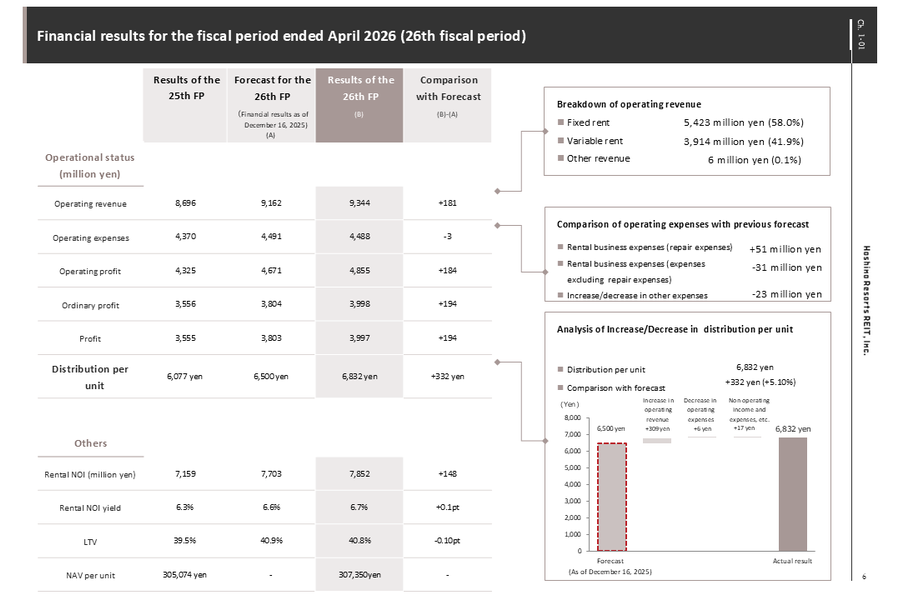
For the fiscal period ending April 2026 (26th fiscal period), our initial forecast for DPU (distribution per unit) was 6,500 yen, a significant increase from the previous period. This reflected inclusion of demand from the Osaka Expo in the variable rent calculation period. In addition, performance at “the b 5 hotels” (Note) and “23 Comfort Inn properties” (Note)exceeded expectations. As a result, the DPU came in at 6,832 yen, significantly above our forecast.
Winter demand has traditionally been a challenge for the “23 Comfort Inn properties”(Note). However, our strategy of capturing corporate demand has taken effect.
As a result, our DPU exceeded the pre-COVID peak one period earlier than anticipated at the time of our previous earnings announcement.
Other key metrics are shown on the slide.
(Note) As of June 15, 2026, HRR owns 71 properties. Among these, the five properties under "the b" brand operated by Ishin Hotels Group Co., Ltd. are defined as "the b 5 hotels", and the 23 budget hotel properties under the "Comfort Inn" brand operated by Greens Co., Ltd. are defined as the "23 Comfort Inn properties".
~Actual and forecast distribution per unit and changes in LTV~
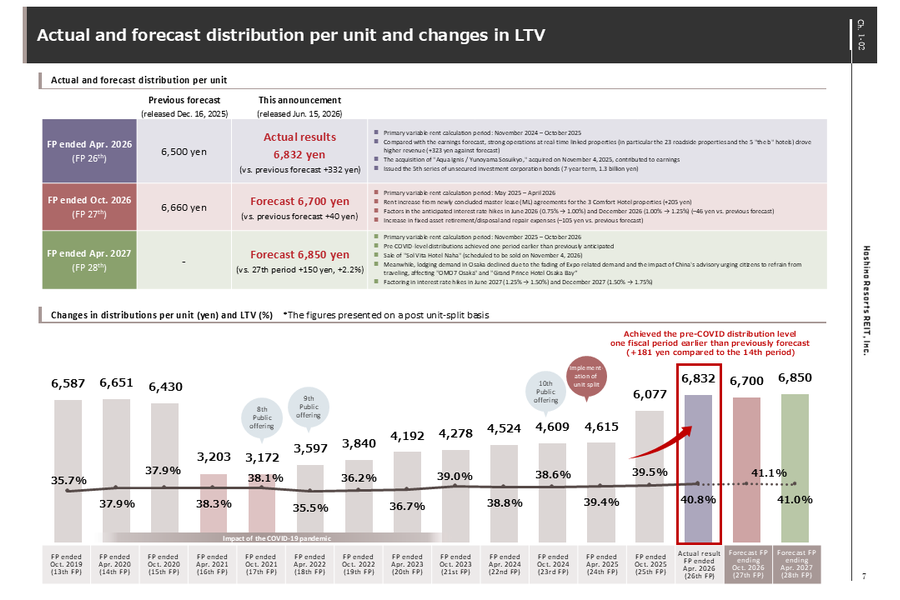
The 26th fiscal period is as explained on page 6. For the 27th fiscal period, we forecast a DPU of 6,700 yen, 40 yen above our previous forecast. The primary growth driver is the new leasing agreement for “three Comfort Hotel properties”(Note). The revised agreements change the rent structure to a combination of fixed and variable rent. This should contribute by 205 yen per unit, even with only four months’ rent contribution this fiscal period. On the cost side, we expect downward pressure of around 46 yen from a higher interest expense, reflecting assumed interest rate hikes in June and December 2026; and around 105 yen from higher fixed asset disposals and repair costs.
For the 28th fiscal period, we forecast a DPU of 6,850 yen, up 150 yen from the 27th fiscal period. The growth assumes that downward pressure from the seasonal nature of rental income will be outweighed by the sale of “Sol Vita Hotel Naha”.
On the other hand, both demand and prices in the Osaka market have recently softened. This owes to a reactionary decline in lodging demand after the end of the 2025 Expo, as well as a decline in visitors from China.
We expect this to affect properties such as “OMO7 Osaka” and the “Grand Prince Hotel Osaka Bay”.
(Note) This refers to "Comfort Hotel Hakodate", "Comfort Hotel Tomakomai", and "Comfort Hotel Kure" operated by Greens Co., Ltd. The same shall apply hereinafter.
~Operating results summary by brand~
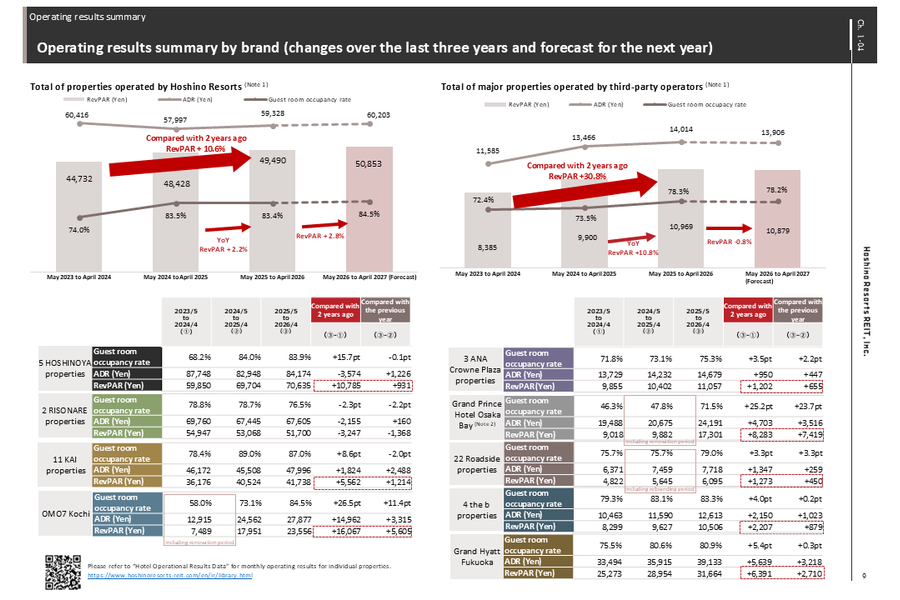
For properties operated by Hoshino Resorts, RevPAR (Note) increased by 2.2% year on year. While growth appears to have slowed, we believe this reflects temporary factors such as earthquake rumors that originated in Hong Kong last summer, the effects of natural disasters, and the concentration of leisure demand in Osaka during the Expo period. We conservatively forecast RevPAR growth of 2.8% over the next year.
As for the externally operated properties, RevPAR increased by 10.8% year on year on strong inbound demand, as well as demand generated by the Osaka Expo. Over the coming year, while Expo-related demand is expected to subside, we anticipate that strong performance at properties such as the “Grand Hyatt Fukuoka” will mitigate the impact.
For consistency in historical comparisons, properties acquired after May 2023, including “OMO7 Osaka” and “the b asakusa”, are excluded from these figures.
(Note) "RevPAR" stands for Revenue Per Available Room per day, and is calculated by dividing the total lodging revenue for a certain period by the total number of available rooms during the same period. The same shall apply hereinafter.
CHAPTER 2: Highlights of operations
~Overview of the Management strategy in Response to Changes in Operating Environment~
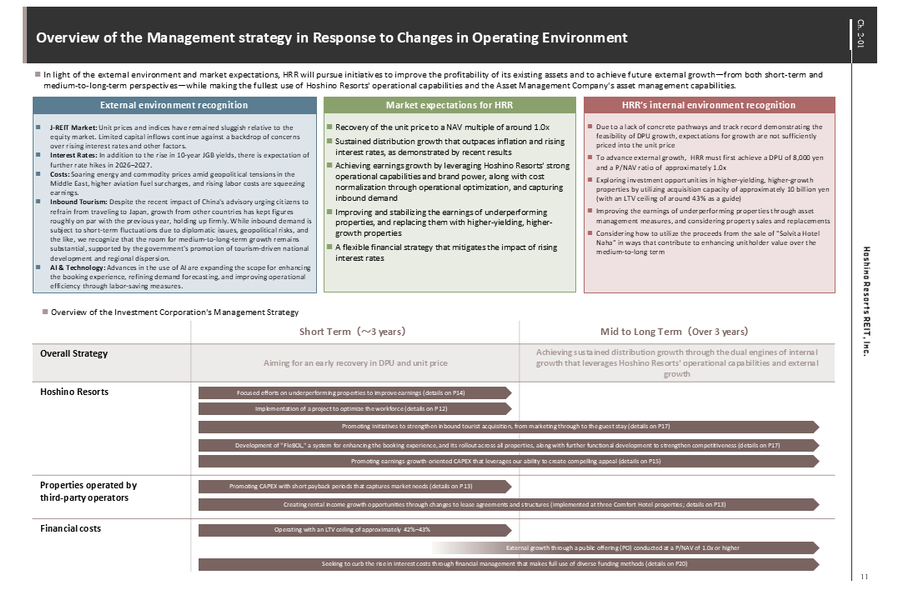
From an external environment perspective, unit prices across the J-REIT market remain under pressure, and expectations for additional policy rate hikes in Japan persist. On the cost side, rising energy prices and labor costs continue to weigh on profitability, and while inbound demand could be volatile in the near term, medium- to long-term growth potential remains significant. In addition, AI is creating new opportunities to enhance the guest booking experience and improve operational efficiency.
Against this backdrop, we believe the market is looking for a clear path toward sustainable distribution growth, supported by tangible results.
To meet these expectations, we will fully leverage both Hoshino Resorts’ operational expertise and our asset management capabilities. We will thereby continue to enhance the earnings power of our assets while also pursuing future external growth, from both a short-term and a medium- to long-term perspective.
In the short term, we will focus on underperforming properties, strengthen inbound demand capture, increase rental income through lease revisions, and promote CAPEX (capital expenditure) with short investment payback periods. Over the medium to long term, we will pursue sustainable distribution growth through both internal growth, leveraging our operational expertise, and external growth, backed by our extensive property pipeline.
These initiatives will be discussed in more detail later.
~Initiatives to drive distribution growth~
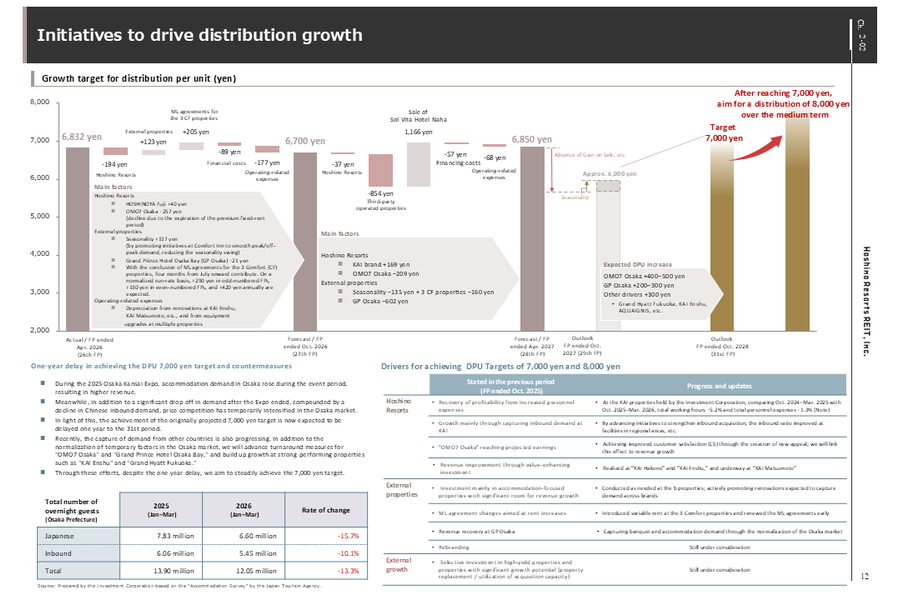
The graph illustrates our roadmap for DPU growth and lays out the path from the current level above the pre-COVID peak, toward our target of 7,000 yen and, over the medium term, 8,000 yen.
The factors behind the changes in the forecast for 27th and 28th fiscal periods are shown above. Excluding one-offs such as gains on the sale of “Sol Vita Hotel Naha”, the DPU in the 29th fiscal period would be around 6,000 yen. From there we target growth to DPU of 7,000 yen by the 31st fiscal period.
The attainment of our 7,000 yen DPU target has been pushed back by one year compared with our previous plan, primarily due to market conditions in Osaka. During the 2025 Expo, we captured demand to drive revenue growth. However, the post-Expo fallback, coupled with a decline in visitors from China, has intensified price competition in Osaka.
That said, we believe many of these factors are temporary. We are already seeing progress attracting demand from other countries. We will continue with turnaround measures on “OMO7 Osaka” and the “Grand Prince Hotel Osaka Bay”. At the same time, we expect continued growth from strong-performing properties such as “KAI Enshu” and “Grand Hyatt Fukuoka”.
Despite the one year delay in achieving our target DPU of 7,000 yen, we remain committed to its achievement.
~Lodging-focused properties: initiatives contributing to rent increases~
Etsuro Takahashi, Director, Head of Investment Management Division:
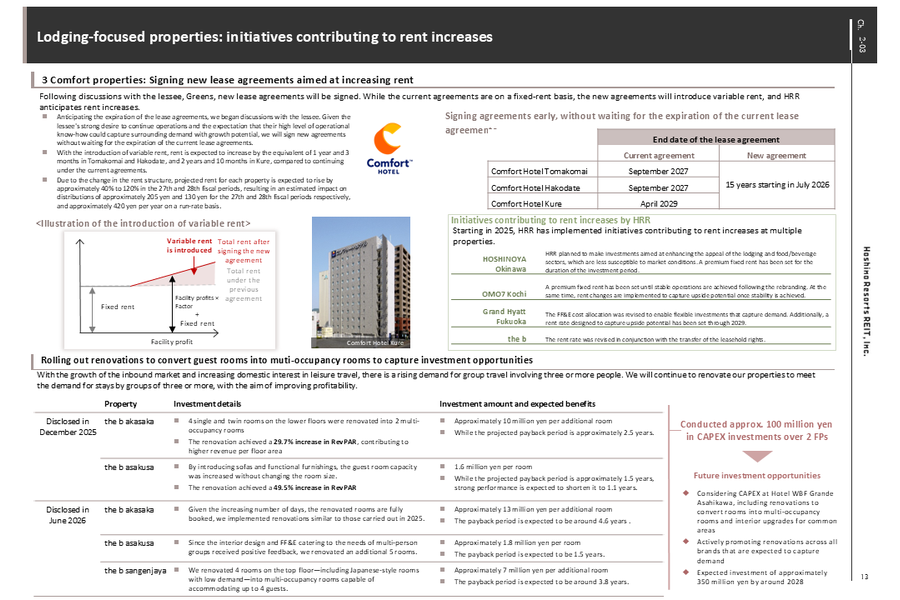
I will explain the rent increases achieved through contract revisions. We have signed new lease agreements for “three Comfort Hotel” properties aimed at increasing rental income.
The existing agreements comprised only fixed rents. Under the new structure, rent will be linked to GOP(Gross Operating Profit). Following discussions with the tenant, Greens, we were able to implement the new agreements before the expiration of the current leases. We therefore expect rental income to increase from the 27th fiscal period onward, boosting DPU by around 205 yen in the 27th fiscal period and around 130 yen in the 28th fiscal period. Once fully implemented, we anticipate an annual boost of around 420 yen.
We continue to implement multi-occupancy rooms to capture investment opportunities. We have combined two guest rooms into one larger room and introduced loft beds and sofa beds to increase room capacity. Following the renovations, RevPAR increased by 29.7% at “the b akasaka” and by 49.5% at “the b asakusa”. Over the past two fiscal periods, we have deployed CAPEX of around 100 million yen in these projects. We will continue to capture investment opportunities that contribute to higher profitability and earnings growth.
(Note) “GOP” refers to the Gross Operating Profit set by each hotel in hotel operations.
~Aiming for improved business performance through a virtuous cycle of operations centered on customer satisfaction~
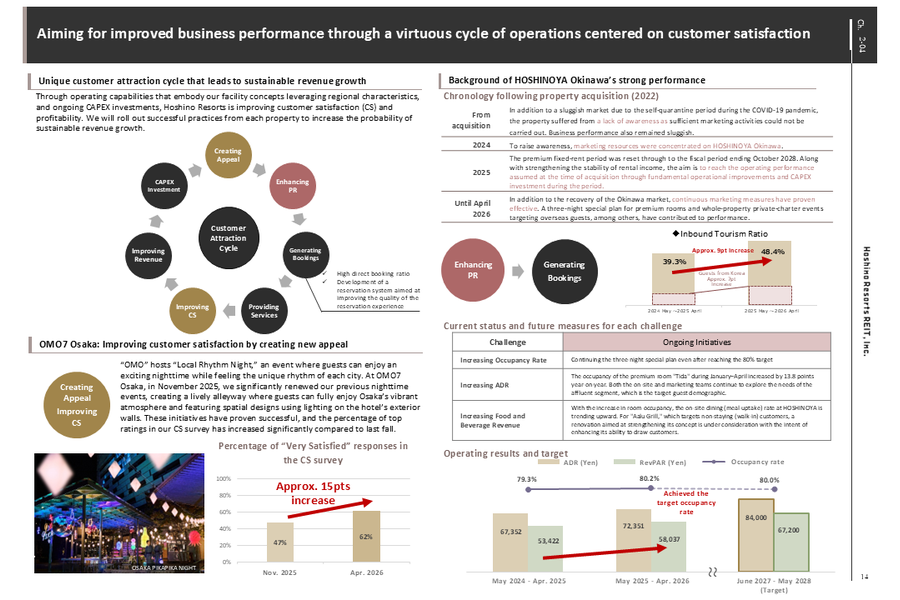
At Hoshino Resorts, we have developed a unique growth cycle in which CAPEX deployment, the creation of attractive experiences, and public relations activities reinforce one another, helping drive sustainable earnings growth. As a concrete example, we would like to highlight “OMO7 Osaka”. The OMO brand offers the Local Rhythm Night, designed to provide guests with an exciting nighttime experience while enjoying the unique rhythm of each destination. At “OMO7 Osaka”, this program underwent a major renewal last November.
The concept was to create a space that captures the energy and vibrancy of Osaka. The revamp raised media exposure, attracting more guests specifically interested in the program. By delivering experiences that met those guests' expectations, customer satisfaction also improved, resulting in a positive cycle. The percentage of guests selecting the highest satisfaction rating, "Very Satisfied," increased significantly, from 47% to 62%.
In the case of “HOSHINOYA Okinawa” a cycle driven by stronger public relations is at work, and the occupancy rate has been rising steadily.
~CAPEX that maximizes Hoshino Resorts' "Appeal-Creation Capabilities"~
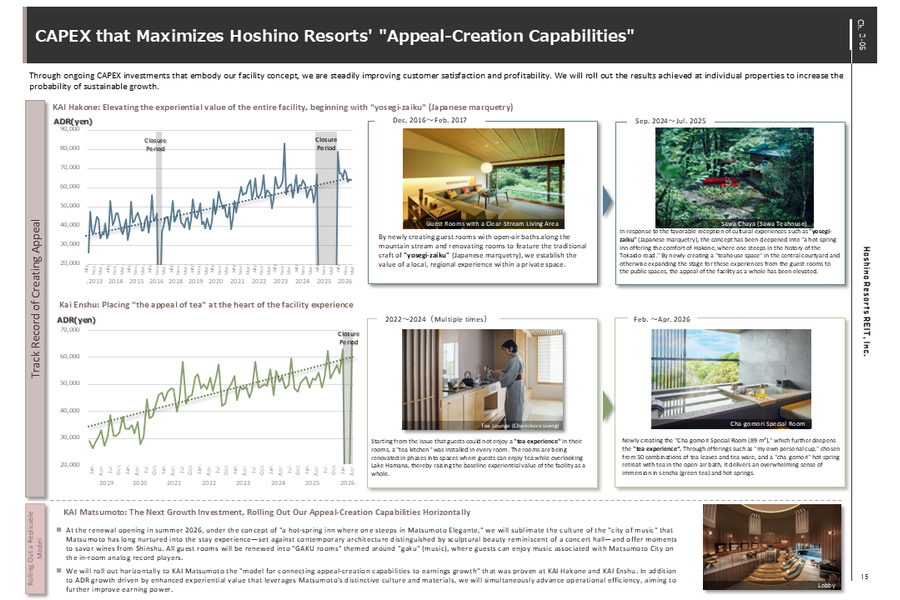
By making consistent investments that express each property's core concept, we have achieved sustained growth in ADR (Note). We will continue to roll out successful initiatives across the portfolio, aiming thereby to increase the probability of ADR growth across the entire portfolio.
As examples of this approach, “KAI Hakone” carried out guest room renovations designed to offer guests an experience of being immersed in the history of the Tokaido route. We have also consistently carried out renovations at “KAI Enshu” that leverage the “appeal of Japanese tea”, since 2022. Both investments have contributed to higher ADR and improved guest satisfaction.
We are currently renovating “KAI Matsumoto” in preparation for its reopening in the summer of 2026. In addition to supporting ADR growth, the investment aims to optimize operational efficiency. We will provide a further update on future earnings presentations.
(Note) “ADR” means the Average Daily Rate, calculated by dividing total lodging revenue for a given period by the total number of rooms sold (the cumulative number of occupied rooms) for the same period. The same applies hereinafter.
~Inbound tourism ratio~
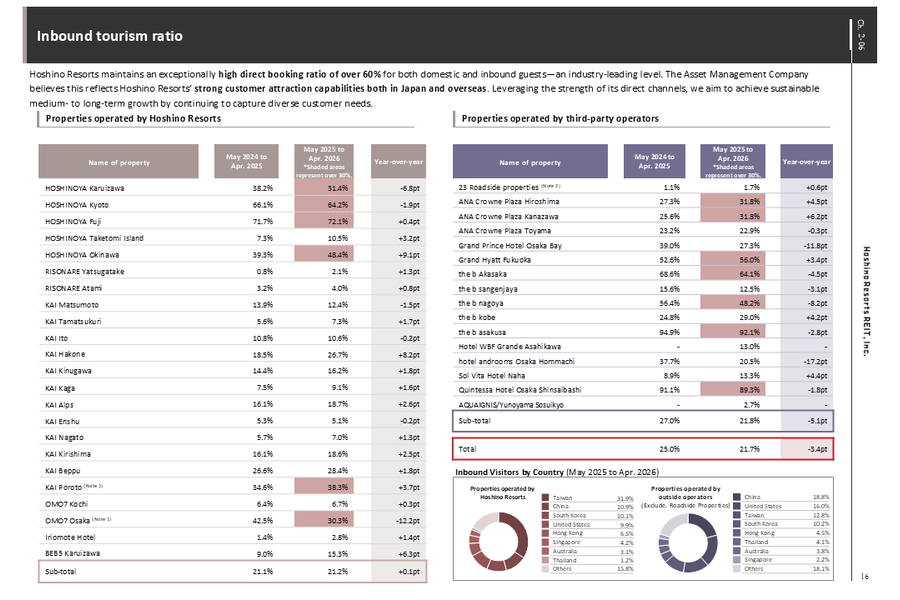
Among properties operated by Hoshino Resorts, the inbound guest ratio is rising at “HOSHINOYA Okinawa” and among our externally operated properties, the ratio is rising at “ANA Crowne Plaza Hiroshima” and “ANA Crowne Plaza Kanazawa”. Though part of this reflects broader market trends, in the case of “HOSHINOYA Okinawa”, we believe the increase also reflects the success of Hoshino Resorts' marketing initiatives, as discussed on page 14 of the presentation slide.
In contrast, both external and Hoshino-operated properties in Osaka have experienced a decline in their inbound guest ratio, driven mainly by the decrease in visitors from China. That said, we believe this is largely an Osaka-specific phenomenon, with inbound demand for Japan largely resilient. As dependence on China declines, we expect the inbound guest ratio in Osaka to recover naturally over time.
Overview of the Tourism Market and the Pre-Trip Experience “FleBOL”
Yoshiharu Hoshino, Representative of Hoshino Resorts:
Hello, this is Yoshiharu Hoshino of Hoshino Resorts (hereinafter “HR”).
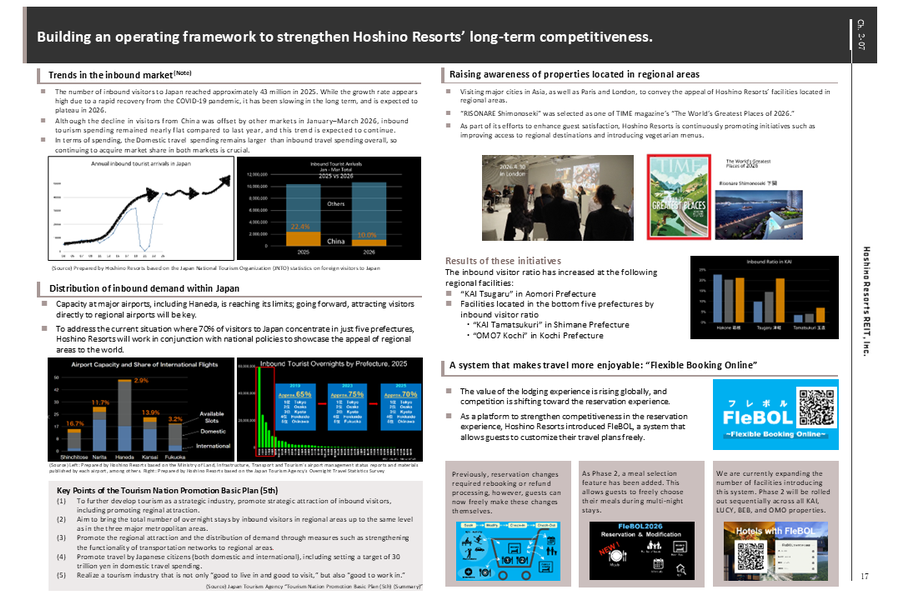
In 2025, Japan saw a record of 42.7 million international visitors. It was a sharp increase from the COVID-19 pandemic period, but if you look at the last 15 years, the growth rate is decelerating. As we navigate this turning point, our strategic direction becomes more critical. Hoshino Resorts believes that the inbound tourist figure for Japan in 2026 would level out with flat growth.
Looking at our performance between January and March of this year in comparison to 2025, the number of visitors from China decreased slightly more than we anticipated. However, as we expected, this was offset by visitors from other international markets, bringing the total figure to roughly the same level as 2025. We expect this trend to continue throughout 2026, leading to a stabilized inbound figure remaining largely on par with last year’s results.
Source: Prepared by Hoshino Resorts based on Japan National Tourism Organization (JNTO) visitor statistics
This trend should not be viewed negatively. The recent rapid growth of international visitors has exposed structural challenges in different areas of the tourism industry. This period would offer valuable opportunity for us to refine our operations and improve our industry to prepare for future growth.
There are two prerequisites to address for our next growth phase. One is that we need to solve the issue of airport capacity. Major airports are very close to their capacity limit, while many regional airports are underutilized. We should actively leverage these airports to accept more international visitors across the country, leading to my next point.
Currently, five of the major prefectures are accepting 70% of the total international visitors to Japan. To accommodate more international visitors, 42 prefectures with lesser-known destinations should be promoted. This is a critical policy and we are working alongside the government to accomplish this shared goal.
Source: Prepared by Hoshino Resorts based on the Overnight Travel Statistics Survey by the Japan Tourism Agency (JTA)
Since the majority of Hoshino Resorts facilities are located in these lesser-known regions, we have actively promoted them globally over the last 10 years through press conferences held in major cities across Asia, as well as in Paris and London. One example is RISONARE Shimonoseki, a new property in Yamaguchi prefecture, which has historically ranked among the bottom five in Japan in terms of the accepting international visitors, was selected as TIME Magazine's World's Greatest Places for 2026 and is set to be published in its upcoming issue in July.
While KAI Hakone has an established international brand, other KAI facilities are also steadily expanding their international share. We see the same in our city hotels, OMO. Osaka is one of the most famous cities in Japan, whereas OMO7 Kochi is in a prefecture that has traditionally ranked among the bottom five prefectures in terms of tourism popularity. Despite this, our property has been gradually increasing its number of international guests.
At the same time, we must recognize the importance of the domestic market. Tourism has now grown to become the second largest industry in Japan by volume. Therefore, we must target both domestic and international market simultaneously.
Source: Prepared by Hoshino Resorts based on Inbound Consumption Trends Survey by the Japan Tourism Agency (JTA)
■Pre-Booking Experience Improvement (FleBOL System)■
This is why we are putting a lot of emphasis on our reservation system. While service and property facilities are always important, there is still so much room for improvement in the reservation system across the Japanese tourism industry. Our vision is to provide seamless digital accessibility, allowing guests to effortlessly make and modify reservations from their smartphones.
Through FleBOL, we introduced three services last year. Modifying the number of guests, room type, and schedule, is now available for many of our facilities.
We are introducing meal customization this year. This is a very large step for us because, traditionally, most hot spring ryokans and resort hotels bundle accommodations with two meals at a fixed price. Under this model, a three-night booking restricts the guest to the same restaurant for consecutive nights. This structural inflexibility is an industry-wide issue and a major barrier to longer stays.
Our system removes this constraint, allowing guests to choose different dining venues and modify their selections after booking.
We are actively increasing the number of hotels under our management that utilize this FleBOL system. You can look up which facilities offer FleBOL. By this fall, we will be introducing the system in most of the facilities.
I hope that these continuous improvements will allow us to better approach our repeaters and to strengthen brand loyalty.
Thank you very much.
* The explanation by Yoshiharu Hoshino, Representative of Hoshino Resorts, describes the current status and strategies of Hoshino Resorts from the perspective of Hoshino Resorts, and is not an explanation of the investment strategies or policies, etc., of HRR.
* The properties introduced herein include facilities that are not owned by HRR.
* Regarding the facilities not owned by HRR, there are currently no plans or decisions made by HRR to acquire them.
Financial Strategy ~Enhancing risk management and financing strategies in a rising interest rate environment~
Takahiro Kabuki, Head of Corporate Planning Division and Head of Finance & Accounting Division:
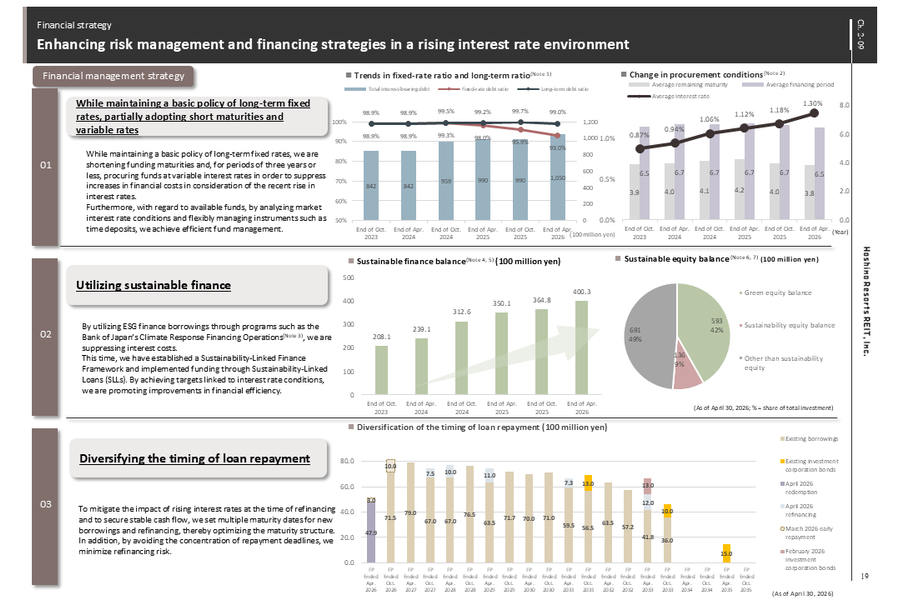
In the rising interest rate environment, we are enhancing our financial management through three key initiatives.
The first is the optimization of our funding structure.
While long-term fixed-rate financing remains our core approach, we are also utilizing floating-rate borrowings for financing with maturities of three years or under, reflecting the recent increase in funding costs. We also actively manage cash on hand through instruments such as time deposits to achieve efficient funds management.
The second initiative is the use of sustainable finance. We have been reducing interest costs through measures such as climate-related financing programs supported by the Bank of Japan(Note), and have also taken out sustainability-linked loans.
The third initiative is the diversification of debt maturities. By avoiding concentration of repayment dates, we reduce the risk of sharp increases in financing costs and minimize refinancing risk.
Through these initiatives, we maintain a stable financial foundation, even in a rising interest rate environment.
(Note) This refers to the "Funds-Supplying Operations to Support Financing for Climate Change Responses" conducted by the Bank of Japan for financial institutions selected as eligible counterparties.
Financial Strategy ~Track record of initiatives to strengthen the financial base that can mitigate the impact of rising interest rates~
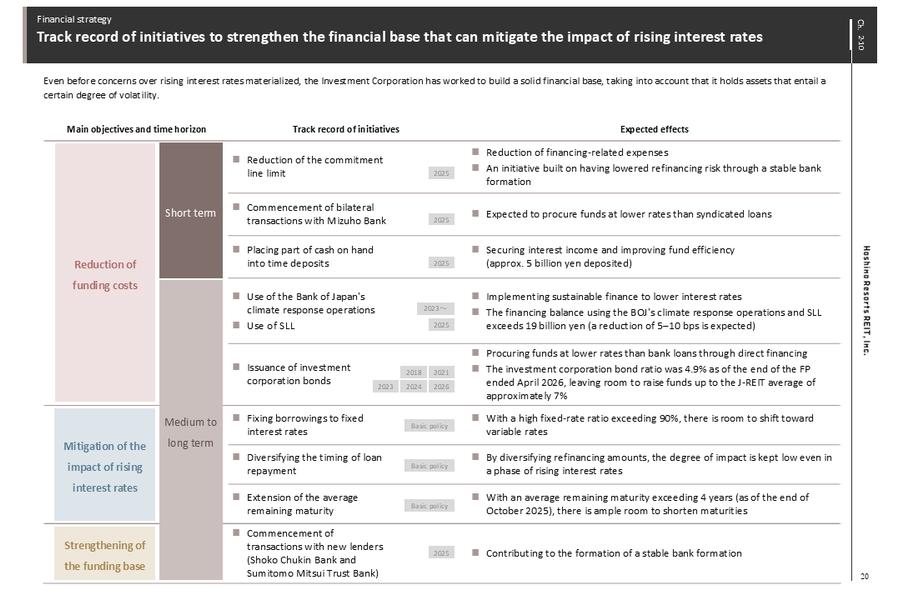
We have been intentionally enhancing our financial foundation since before concerns over higher interest rates emerged. Our initiatives can be grouped into three key objectives.
The first is reducing funding costs. We have lowered financing costs through initiatives such as commencing bilateral transactions with Mizuho Bank, utilizing sustainable finance, and issuing investment corporation bonds. This has enabled us to secure funding on more favorable terms than conventional syndicated loans. Investment corporation bonds currently account for 4.9% of our total borrowings, which indicates additional capacity compared to the J-REIT average of around 7%.
The second objective is to mitigate the impact of rising interest rates. We have limited interest rate risk during refinancing through a fixed-rate debt ratio of over 90%, a diversified debt maturity profile, and extending by the average remaining maturity. At the same time, we believe there is still substantial room to use floating-rate financing, which currently offers a lower funding cost.
The third objective is to strengthen our funding platform. We have entered transactions with new lenders and continue to build a stable bank formation.
Financial Highlights ~Strong financial base and financial stability~
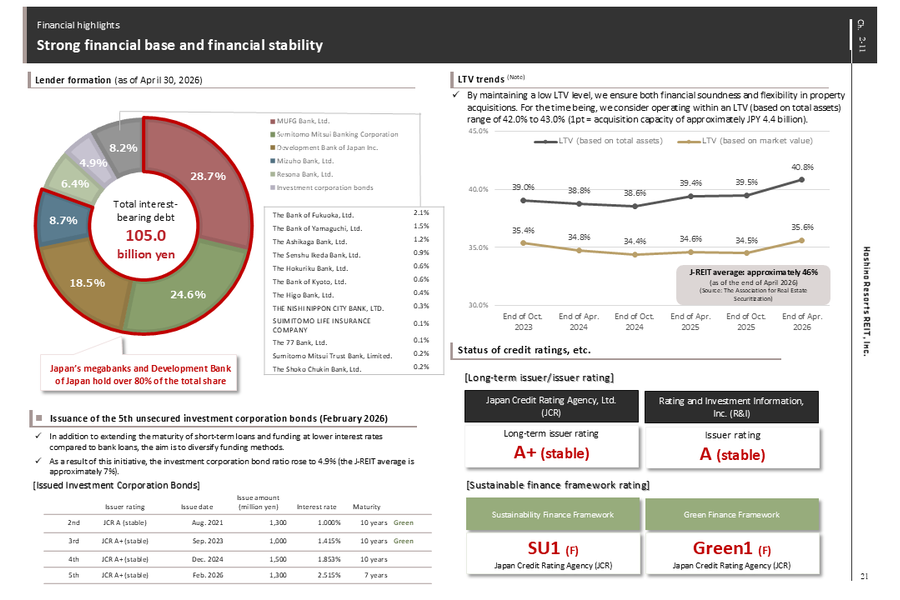
More than 80% of our borrowings are provided by Japan's major banks and the Development Bank of Japan. We have therefore established a stable lender formation.
Our LTV is 40.8% on a total asset basis. This is below the J-REIT average of around 46%, allowing us to maintain both financial soundness and flexibility for future acquisitions. For now, we intend to bring LTV to between 42 and 43%. Each additional percentage point represents roughly 4.4 billion yen of acquisition capacity.
In February this year, we also issued our fifth investment corporation bond. We continue to diversify our funding sources, and investment corporation bonds now account for 4.9% of our total financing.
CHAPTER 3: Future operation strategy
Operating strategy 1: The vision for Hoshino Resorts REIT, Inc.
Rina Hiromitsu, General Manager of Corporate Planning & Administration Department:
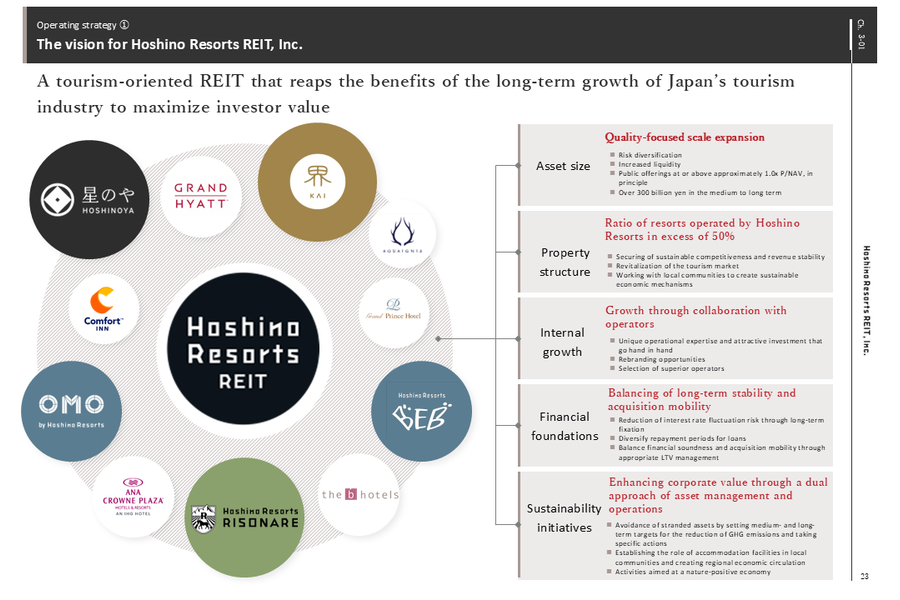
We continue to hold a medium- to long-term target of 300 billion yen in assets under management. However, our approach is not scale driven.
In principle, we plan to conduct public offerings at a price-to-NAV(net asset value) ratio of around one or higher.
As mentioned earlier,, our first priority is to support a recovery in our unit price by steadily increasing distributions, and build an environment conducive to future equity offerings.
Operating strategy 2: Steady growth in asset size
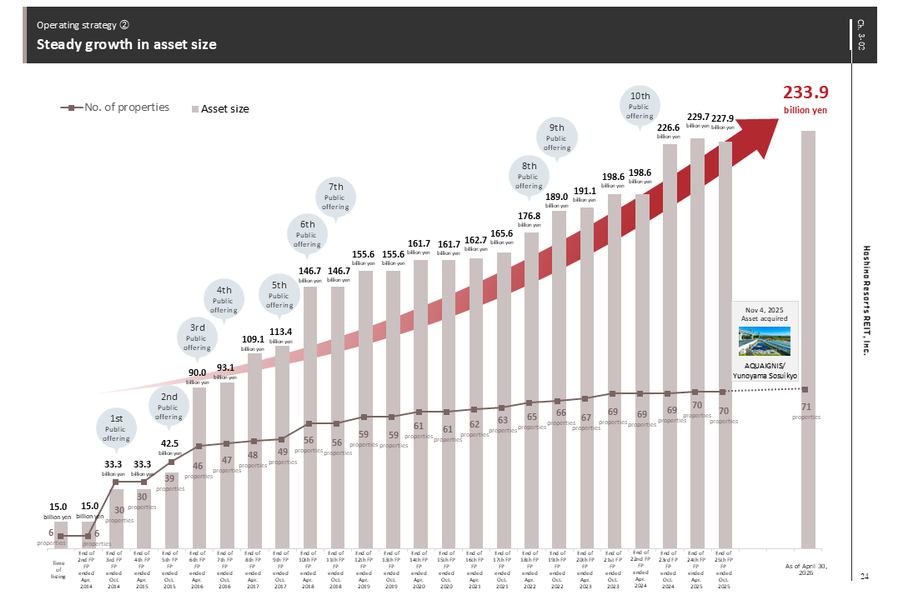
We have been steadily expanding our asset base, and as of 30th of April 2026, our portfolio consisted of 71 properties worth a total of 233.9 billion yen.
Operating strategy 3: Portfolio structure (based on acquisition price)
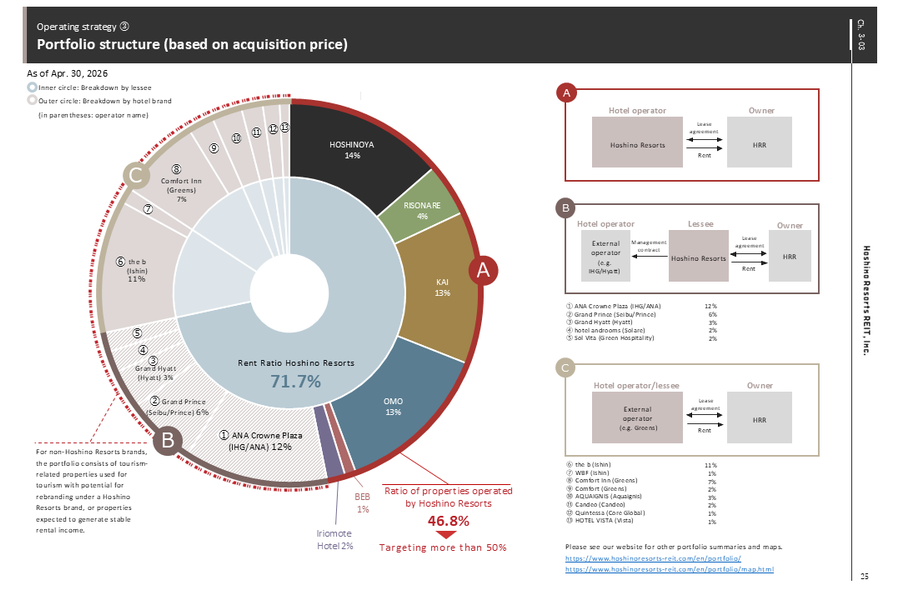
Following the acquisition of “AQUAIGNIS”, the proportion of properties operated by Hoshino Resorts stands at 46.8%.
We believe Hoshino Resorts' operational expertise is one of the key drivers of the REIT's growth, and intend to continue managing the portfolio with a ratio of over 50%.
Operating strategy 4: Abundant acquisition opportunities through DBJ joint fund, a fund jointly managed by Hoshino Resorts and the Development Bank of Japan
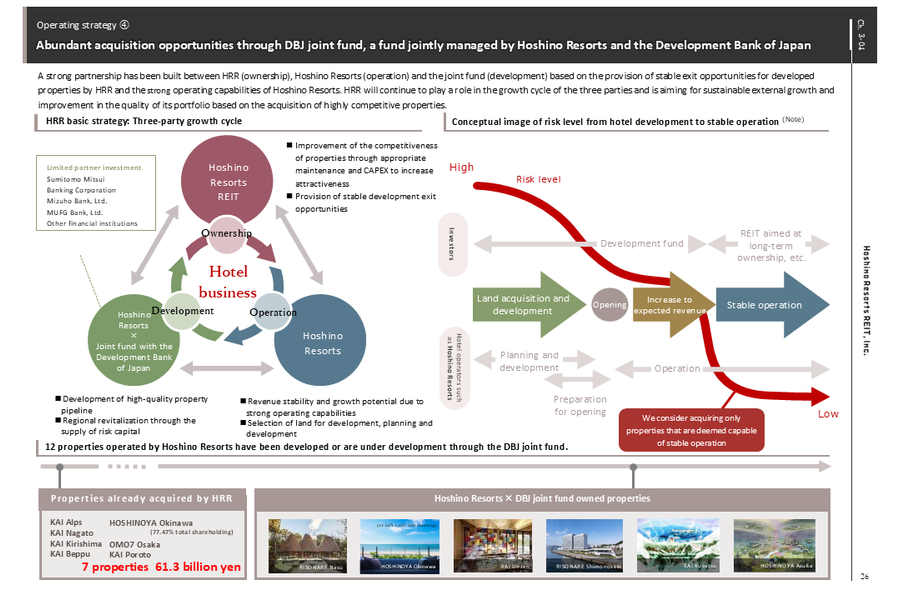
The hotel business is built on three key functions: ownership, operation, and development. In our case, the REIT is responsible for ownership, Hoshino Resorts oversees operations, and the joint fund between Hoshino Resorts and the Development Bank of Japan is responsible for development. This structure allows each party to leverage its respective strengths and creates a distinctive platform for growth.
~List of the property pipeline~
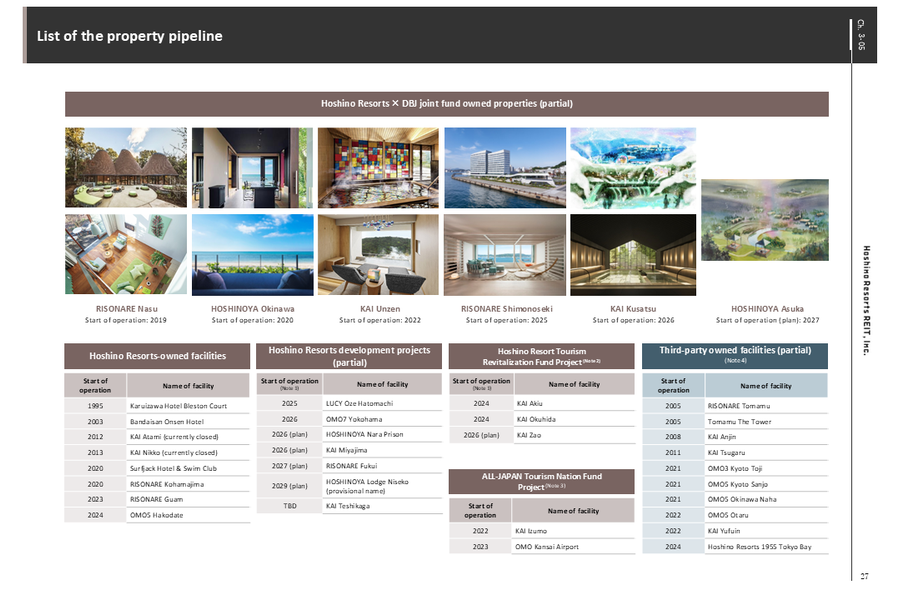
A preliminary estimate of potentially acquirable properties puts our total pipeline at around 130 billion yen. We believe this provides sufficient acquisition opportunities for future external growth centered on the DBJ joint fund.
We will carefully evaluate acquisitions based on the current market environment.
Hoshino Resorts’ Initiatives ~Future development and openings~
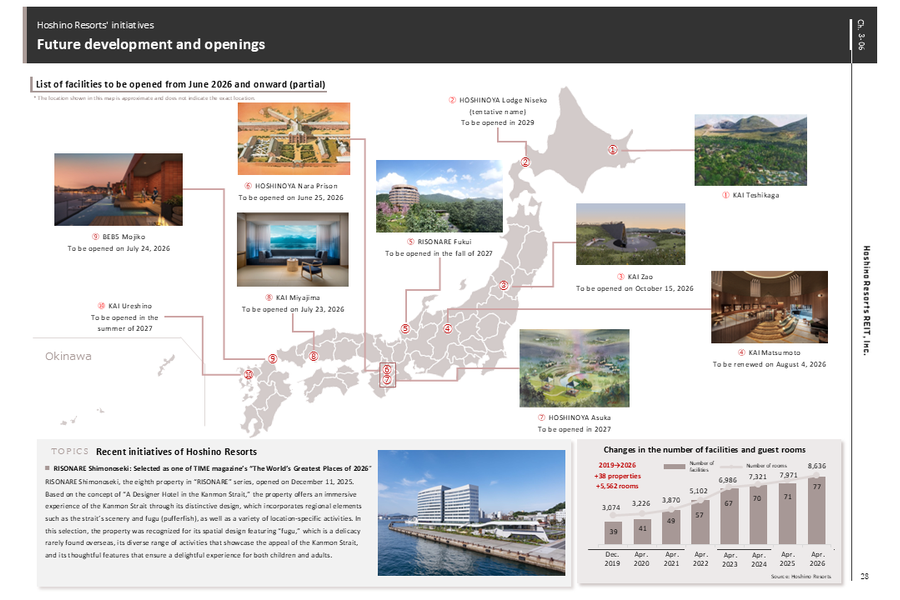
We continue to expect a well-balanced rollout across the “HOSHINOYA”, “KAI”, “RISONARE”, “OMO”, and “BEB” brands, driving steady expansion in both the number of operating properties and total room capacity.
In comparison to 2019, the portfolio has increased by 38 properties and 5,562 rooms.
One recent highlight is that “RISONARE Shimonoseki”, a pipeline property, was selected by “TIME Magazine” as one of the World's Greatest Places.
Opened in December 2025, “RISONARE Shimonoseki” has been highly praised for its distinctive design inspired by fugu pufferfish, as well as the wide range of activities that take advantage of its location on the Kanmon Strait.
Our pipeline includes highly attractive properties such as this. We believe the continued accumulation of high-quality assets with strong medium- to long-term earnings growth potential is one of the strengths of the REIT.
CHAPTER 4: Sustainability initiatives
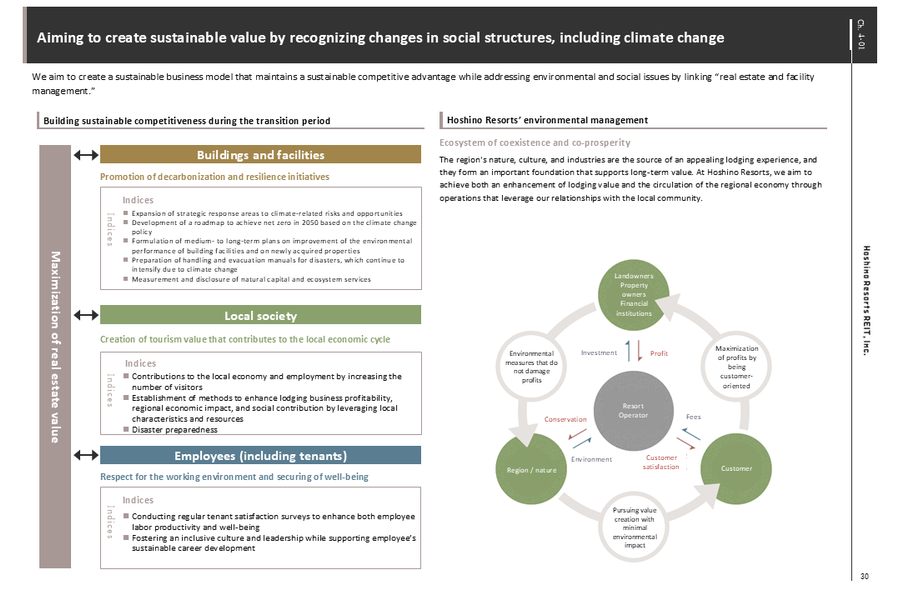
~Aiming to create sustainable value by recognizing changes in social structures, including climate change~
Masae Kikuchi, Chief Sustainability Officer:
HRR has long been committed to sustainability through efforts such as reducing environmental impact and promoting coexistence with local communities.
In recent years, however, issues such as climate change, resource constraints, changes in local society, and labor shortages have become more than simply matters of social responsibility or environmental stewardship. Rather, they increasingly affect property operations, the guest experience, and ultimately longer-term asset value.
~Environmental architecture based on vernacular wisdom~
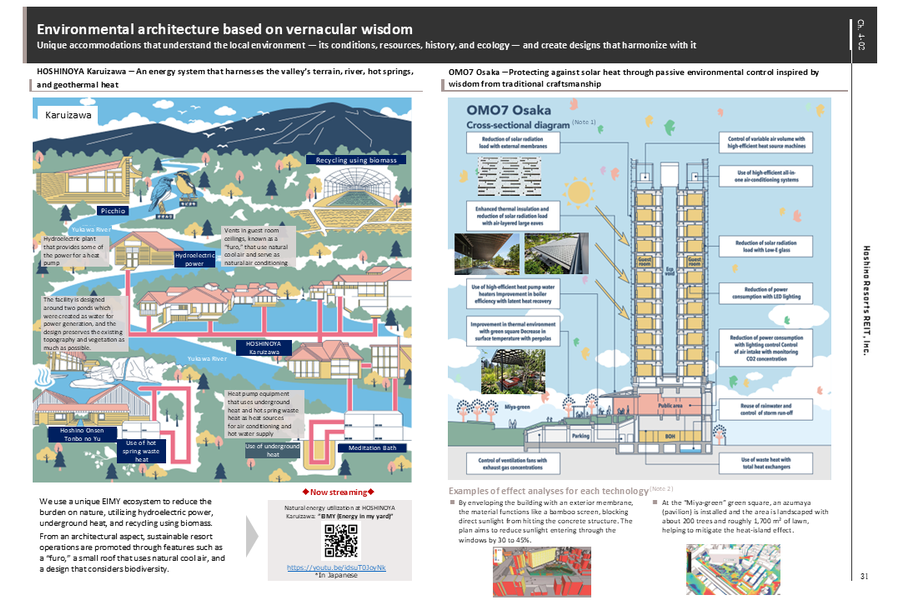
The value of hotels and ryokans is derived not only from the physical assets themselves. Factors such as energy efficiency, resilience to natural disasters, the use of local resources, and the value of experiences unique to the location all contribute to a property's competitiveness and play a role in maintaining long-term appeal.
From this perspective, “HOSHINOYA Karuizawa” and “OMO7 Osaka” are facilities with spaces and experiences that are designed around an appreciation of the local characteristics, including the area's natural conditions, resources, history, and ecosystem. We view “HOSHINOYA Karuizawa” as a representative example of our resort-style properties, and “OMO7 Osaka” as the same for our urban properties.
As these examples illustrate, responding to social and environmental challenges is becoming an increasingly important part of our operations.
~Environmental performance, external evaluation, and GHG emissions reduction initiatives across the supply chain~
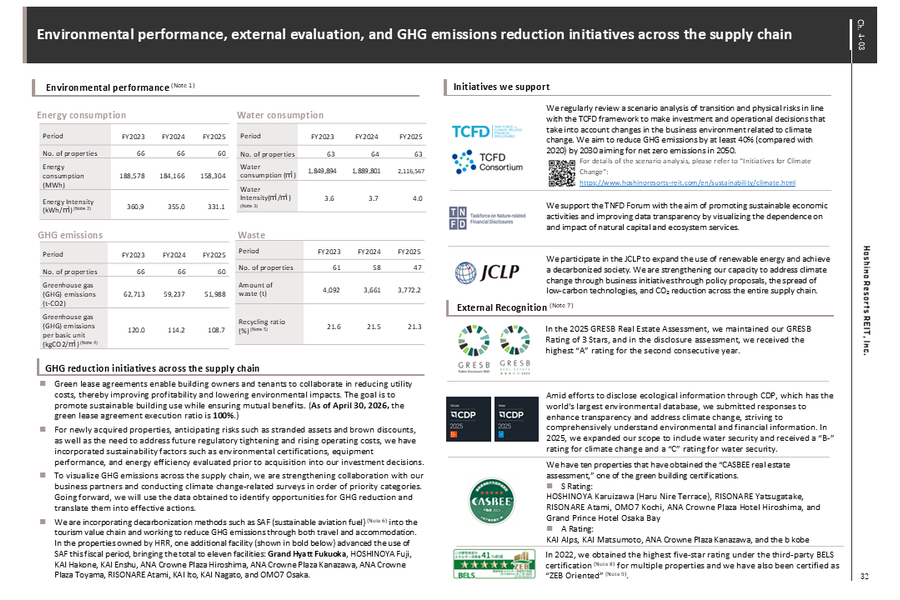
From an environmental perspective, addressing climate change is a crucial issue.
Our efforts to reduce carbon emissions in day-to-day operations are closely linked to the management of energy and building systems across our portfolio. In addition to measuring and disclosing metrics such as greenhouse gas emissions and energy consumption, it is important to use this information to improve operations and support investment decisions.
For example, by utilizing an Internal Carbon Price, or ICP, we can incorporate potential future carbon costs into our investment decisions. This allows us to evaluate the economic benefits of investments in high-efficiency equipment and renewable energy solutions more appropriately. In other words, environmental initiatives should not be viewed simply as additional costs. Rather, they are tools for reducing future risks and enhancing the stability of property operations.
We are also expanding our supply-chain efforts over a wide range of areas, including new property acquisitions, collaboration with operating partners and suppliers, and working with Sustainable Aviation Fuel.
~Initiatives for local society and economy, and employee well-being~
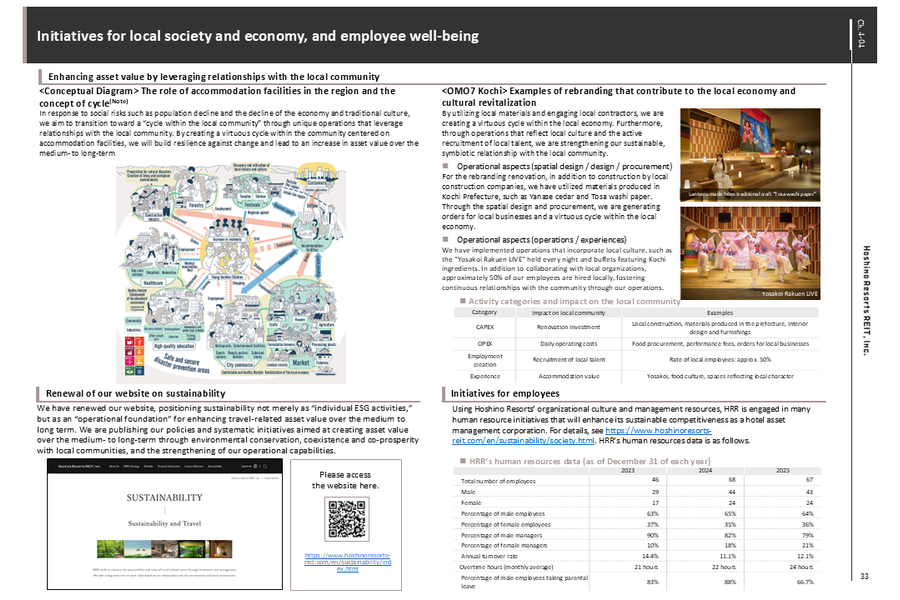
From a social perspective, coexistence with local communities is a key priority.
The value of travel is greatly enhanced by the natural environment, culture, cuisine, industries, and people of each destination. Hospitality experiences that make use of these local resources not only enrich the guest experience, but also help properties become deeply rooted in their communities. This provides a foundation for long-term competitiveness.
We have introduced a conceptual diagram to show how stronger relationships with local communities can enhance asset value. Through our unique operations that leverage those strong relationships, we aim to address social risks such as population decline, weakening regional economies, and the loss of traditional culture, and support a “cycle within the local community”.
One practical example is the rebranding of “OMO7 Kochi” and its contribution to the local economy and cultural development. By creating hospitality experiences that make effective use of local resources, we can deepen our ties with the community, thereby building a more resilient operating platform and supporting long-term growth in asset value.
Finally, for more information on our website renewal and our initiatives for employees, please visit the websites of the REIT and the asset management company.
Sustainability is not simply a collection of environmental initiatives or social contribution activities. Rather, it is an important framework that supports operational stability, enhances the guest experience, strengthens relationships with local communities, and underpins long-term asset value.
As Hoshino Resort REIT, we also recognize social and environmental challenges as important management priorities, and by addressing them, we aim to sustainably enhance the value of our travel-related assets.
* This article may include properties that are not held by HRR (Hoshino Resorts REIT) as of the date of this article.
These properties may include facilities owned by Hoshino Resorts, DBJ joint Fund, and others.
As of the date of this article, including the properties listed in the main sponsor pipeline, HRR has no specific plans to acquire these properties at this time, nor is there any guarantee that it will be able to do so in the future.
*This English translation is provided for informational purposes only. If there is any discrepancy between the Japanese original and this English translation, the Japanese original shall prevail.